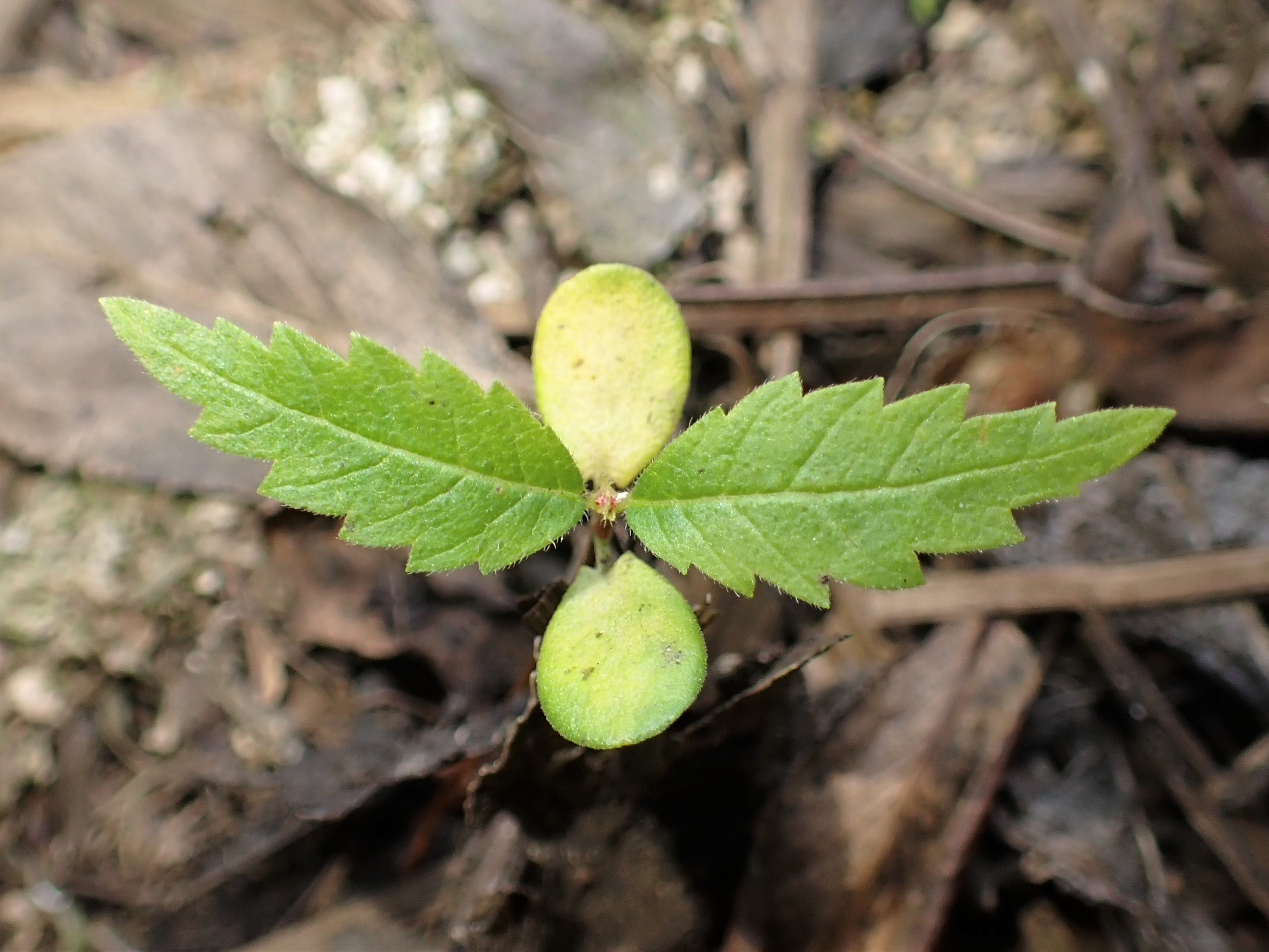
Elm has a specific combination of mechanical properties that makes it useful for particular outdoor applications while limiting its suitability for others. Understanding these properties before selecting elm for a project prevents misapplication and reduces maintenance costs over the service life of the structure.
The property figures in this article are drawn from published forestry sources and reflect values for Ulmus minor unless otherwise noted. Values for Ulmus glabra are broadly similar; Ulmus laevis is somewhat lower across most mechanical measures.
Density and weight
Air-dried elm (Ulmus minor) has a density in the range of 550–690 kg/m³ at 15% moisture content. This places it in the medium-heavy category among European hardwoods — heavier than pine or larch, roughly comparable to red oak, and lighter than beech or hornbeam.
In practical terms, a standard 4-metre length of 100×50 mm elm section at 15% MC weighs approximately 16–20 kg. For pergola beams, this weight is manageable without mechanical lifting for spans up to around 3 metres. Beyond that, the weight becomes relevant for joint design and support post sizing.
Hardness and wear resistance
Elm's Janka hardness is typically in the 850–1050 N range (varies by source and specimen). This is sufficient for outdoor furniture surfaces and decking where foot traffic is moderate. Elm is softer than oak and sweet chestnut but harder than larch or cedar, which are the common alternatives for outdoor furniture in northern Italy.
The interlocked grain that characterises Ulmus minor contributes to its resistance to surface indentation in a different way from straight-grained species: the interlocking fibres distribute impact loads more effectively across the cross-section. This is why elm historically performed well for applications involving repeated impact — wheel hubs, mallet heads, chopping blocks.
Moisture behaviour
Elm is moderately stable dimensionally but more susceptible to movement than oak, sweet chestnut, or teak. The tangential-to-radial shrinkage ratio for elm is relatively high, which means quarter-sawn elm is significantly more stable than flat-sawn elm when exposed to seasonal moisture variation.
Shrinkage reference values for Ulmus minor
- Radial shrinkage (green to air-dry): approximately 4–5%
- Tangential shrinkage (green to air-dry): approximately 7–9%
- T/R ratio: approximately 1.6–1.8
These are indicative ranges from published forestry literature. Actual values vary by specimen and growing conditions.
For Italian outdoor conditions — characterised by dry Mediterranean summers and wetter winters, with greater humidity variation in the Po Valley than in the south — this movement behaviour means elm outdoor furniture should be constructed with allowance for seasonal expansion and contraction. Mortise-and-tenon joints are more forgiving of this movement than dowelled or pocket-screw connections.
Durability classification
Under European standard EN 350:2016, Ulmus minor heartwood is classified as Durability Class 4: moderately durable. This classification applies to naturally exposed conditions above ground, without soil or water contact.
The practical implications of Class 4 classification are:
- Above-ground outdoor use (pergola rafters, furniture, fence rails not in contact with soil): expected service life without treatment is variable and shorter than for Class 2–3 species. Surface treatment is recommended.
- Ground contact or permanent immersion: elm is generally considered Class 2 when permanently submerged — an important distinction. Elm that stays continuously wet performs significantly better than elm that cycles between wet and dry conditions. This is why elm was historically used for water pipe linings, mill machinery, and river lock gates in Europe.
- Intermittent ground contact — posts set in soil that drains and dries: this is the worst condition for elm, and it is not recommended without preservative treatment.
Treatment options
For above-ground outdoor use in Italy, three treatment approaches are appropriate for elm:
Oil finishing
Penetrating oils (linseed oil-based or commercial outdoor wood oils) slow moisture uptake and provide UV protection. For furniture and pergola timbers in a sheltered position, re-application every one to two seasons maintains the surface. This is the most common treatment used for elm furniture sold by Italian artisan workshops.
Water-repellent preservative treatments
For exposed structural members — fence rails, pergola beams in direct rain exposure — a water-repellent preservative applied before assembly extends service life significantly. These treatments are available from Italian building supply distributors and are applied to dry timber by brush or dip.
Thermal modification
Thermally modified elm (heat treatment to approximately 180–220°C) improves dimensional stability and durability class. Thermally modified European hardwoods are produced by several processors in northern Italy and Austria. The modification process changes the colour to a uniform mid-brown and reduces the mechanical strength somewhat — a trade-off relevant for structural applications.
Structural properties
| Property | Value (indicative, Ulmus minor) | Reference species for comparison |
|---|---|---|
| Bending strength (MOR) | ~100–120 MPa | Oak: ~90–120 MPa |
| Modulus of elasticity (MOE) | ~9,000–11,000 MPa | Oak: ~10,000–14,000 MPa |
| Compression (along grain) | ~40–55 MPa | Oak: ~45–60 MPa |
| Shear strength | ~8–12 MPa | Oak: ~10–14 MPa |
These figures position elm as broadly comparable to oak in structural performance, with somewhat greater variability due to the interlocked grain. For non-structural outdoor applications — furniture, pergola infill panels, cladding — the structural figures are generally not the limiting design factor. For load-bearing elements, consult a qualified structural engineer and refer to EN 338 timber grading standards.
References
- FAO Forestry — Wood properties database
- EN 350:2016 — Durability of wood and wood-based products (European standard)
- EN 338:2016 — Structural timber — Strength classes (European standard)
- UNI — Italian national standards body